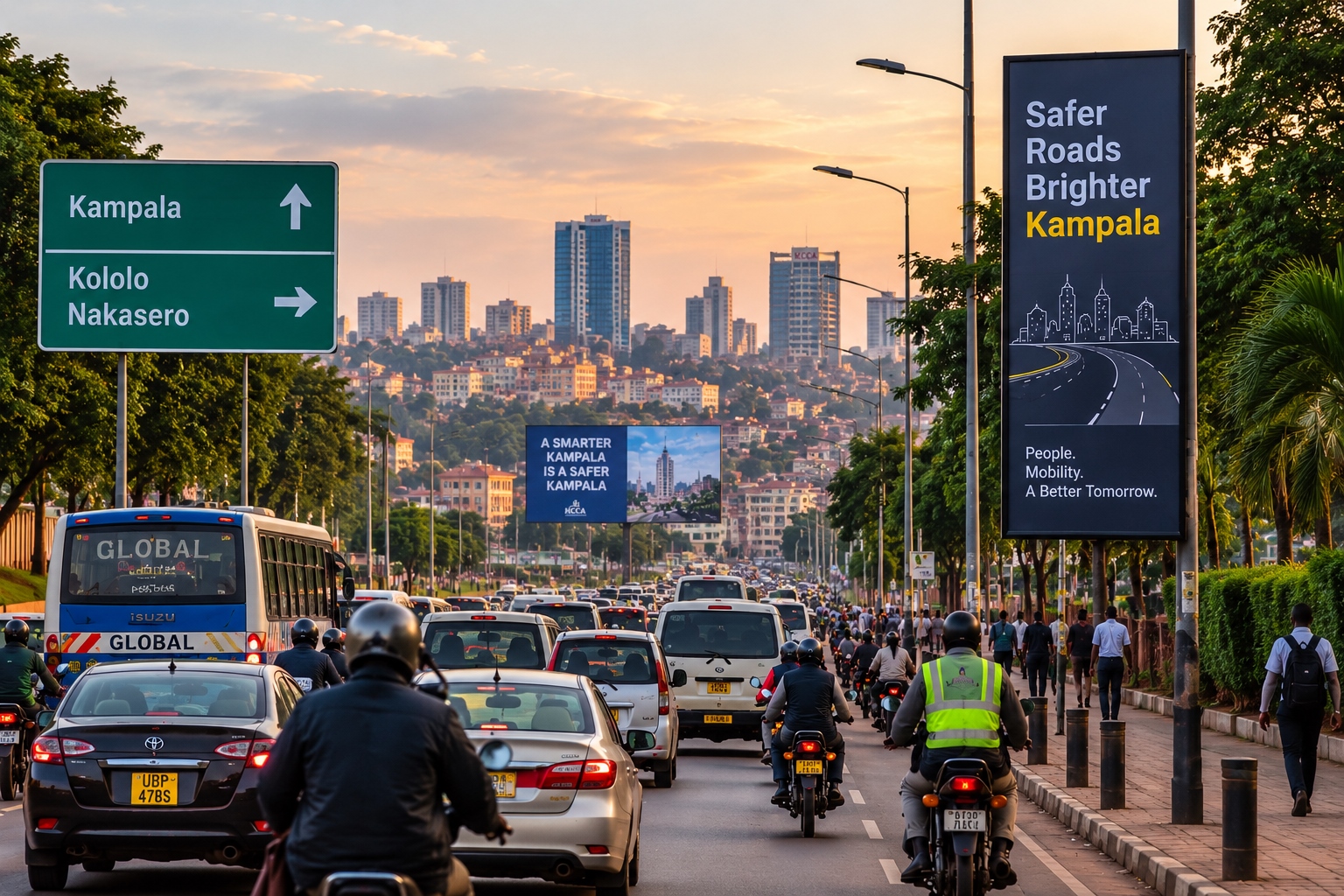
Embracing Technology Trends for Safer and Smarter Mobility in Kampala
Technology is steadily changing how cities move, communicate and respond to everyday challenges. For Kampala, this shift presents an important opportunity to address some of the city’s persistent transport problems, including traffic congestion, unsafe road behaviour, weak road safety data and difficulties in managing the growing number of people using the road network. Uganda is already becoming increasingly digital. According to the Uganda Communications Commission (UCC), by December 2025 the country had approximately 47.1 million active mobile subscriptions, 18.5 million active mobile internet subscriptions and 36.3 million active mobile money accounts. This growing digital reach creates opportunities to use mobile phones, data platforms, mapping technologies and intelligent transport systems to improve mobility and road safety.
Kampala is already embracing smart mobility
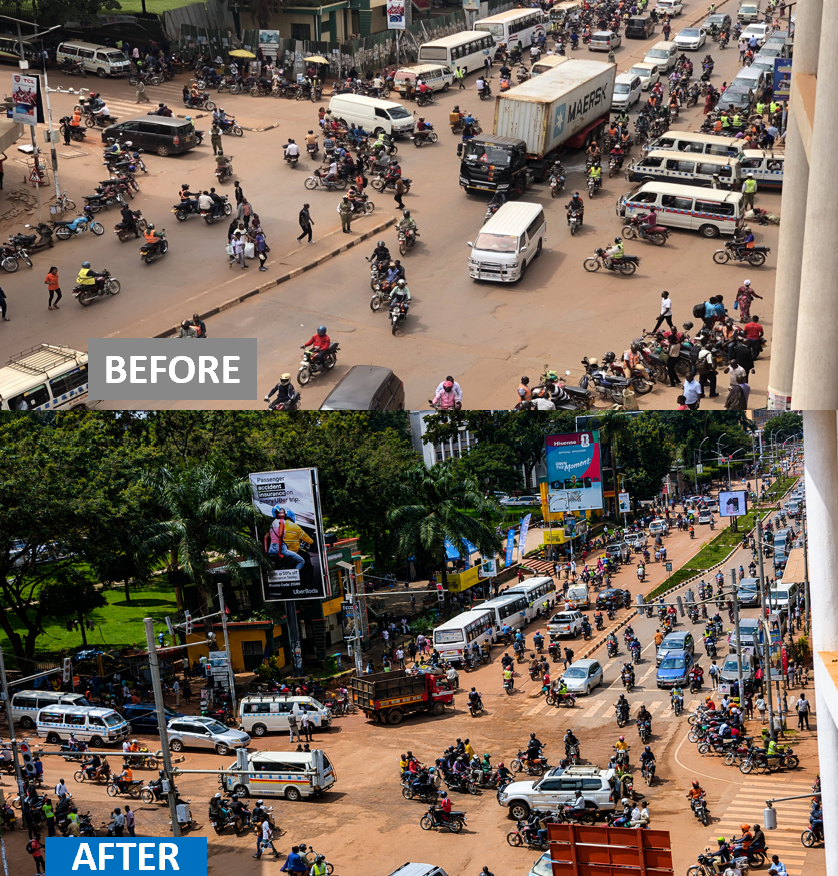
A visible example is the Kampala Traffic Control Centre, commissioned by Kampala Capital City Authority (KCCA) in September 2025. The centre is connected to 30 intersections across the city and allows traffic to be monitored and managed in real time. KCCA has also indicated plans to expand the system and eventually integrate Artificial Intelligence. For a city such as Kampala, this can make a real difference. Traffic conditions can change within minutes because of crashes, stalled vehicles, busy junctions or heavy pedestrian movement. Smart traffic signals, cameras and real-time monitoring can help traffic managers identify these problems earlier and respond more effectively.
However, technology should go beyond helping vehicles move faster. A truly smart transport system should also make roads safer for pedestrians, cyclists, boda boda riders, schoolchildren and persons with disabilities.
Turning road safety data into action
Technology can also improve how road safety problems are identified.Digital surveys, GPS, Geographic Information Systems (GIS), mobile applications and video analysis can help researchers and authorities map dangerous locations, monitor vehicle speeds and identify patterns in road-user behaviour.
Consider a school in Kampala where children regularly cross a busy road without a safe crossing. Instead of relying only on general observations, digital mapping can record where children actually cross, the number of vehicles passing, vehicle speeds and the times when the risk is highest. Such evidence can strengthen the case for interventions such as zebra crossings, raised crossings, pedestrian refuges, better lighting or traffic-calming measures.
Technology therefore gives organisations such as URRENO, government agencies, researchers and communities an opportunity to move towards evidence-led road safety interventions, rather than waiting for serious crashes before taking action.
Smarter enforcement, with important lessons
Uganda has also explored technology-based traffic enforcement through the Automated Express Penalty System, commonly known as EPS Auto. The system was designed to combine surveillance cameras, digital number-plate recognition and databases to identify traffic violations. The experience, however, demonstrated an important lesson about introducing new technology. In June 2025, government temporarily suspended implementation following public complaints about issues including erroneous or duplicated fines, technical challenges, unclear road signage and inadequate public sensitization.
This does not mean that automated enforcement has no place in Uganda. Rather, it shows that technology works best when systems are properly tested, road users understand how they operate and people have a clear way to challenge errors.
Technology must therefore build public trust alongside improving enforcement.
Artificial Intelligence and the future of Kampala’s roads
Artificial Intelligence presents another opportunity. AI-supported systems can analyse large amounts of traffic information, identify congestion patterns and potentially detect risky behaviour at intersections.
For road safety research, computer vision could eventually help analyse video footage to count pedestrians, motorcycles and vehicles or identify conflicts between road users. This could reduce the time researchers spend manually reviewing hours of footage. However, Kampala should not adopt technology simply because it is fashionable. The starting question should always be: What problem are we trying to solve? Sometimes a simple mobile data collection tool or digital map may provide a better and cheaper solution than an expensive AI system.
Putting technology in the hands of communities
Perhaps one of the biggest opportunities already exists in people’s pockets. Mobile phones could allow communities to report potholes, damaged signs, blocked walkways, missing streetlights, dangerous junctions and unsafe school crossings. A boda-boda rider, pedestrian, taxi driver or parent may notice a road safety problem long before it appears in official statistics. Creating simple digital channels for reporting such problems could turn everyday experiences into useful road safety evidence.
At the same time, technology must remain inclusive. UCC has noted that despite Uganda’s growing connectivity, affordability, limited digital skills and other barriers continue to affect meaningful use of digital services. Transport technologies should therefore avoid excluding people who do not own smartphones or cannot regularly afford internet access.
Technology should solve real problems
Kampala does not need to copy every technology being introduced in cities around the world. It needs solutions that respond to its own transport realities. Digital mapping can identify dangerous school routes. Smart signals can improve busy junctions. Mobile platforms can support community reporting. Digital databases can improve crash analysis. Technology-assisted enforcement can encourage safer behaviour when implemented fairly and transparently.
The future of transport in Kampala will increasingly involve technology. But success should not be measured by the number of cameras, applications or digital systems installed. It should be measured by something much more practical: Are our roads becoming safer? Are decisions being made using better evidence? Can people move more easily? And are pedestrians, cyclists, passengers and motorists benefiting from these changes?
Embracing technology should ultimately help Kampala build a transport system that is safer, smarter, more responsive and centred on the people who use it every day.