The life-saving power of vehicle maintenance
You know how as human being we normally go for regular check-ups, now the same applies to vehicles that operate on our roads on a daily. Some people, regrettably, must wait until the cars reach their worst point.
Regular vehicle maintenance is a very paramount life-saving component of road safety. It’s not about keeping a vehicle running; it’s about actively preventing crashes, protecting lives and ensuring a safe driving experience for everyone on the road. Under normal circumstances, manufacturers recommend servicing your vehicle every 3,100-6,200 miles (5,000-10,000 km), or every 6 months. This includes oil changes and tire rotations, which are typically recommended every 6,200 miles (10,000 kilometres)
A well-maintained vehicle is more reliable, efficient, and, most importantly, safer to operate. Neglecting maintenance can lead to mechanical failures that pose a significant risk to the driver/rider, passengers, and other road users.
In Uganda, common vehicle defects like worn-out brakes, smooth or burst tires, malfunctioning lights, and faulty steering systems frequently contribute to road crashes. The issue is especially pronounced with public service vehicles such as taxis and buses, as well as boda bodas, which are often poorly serviced or overloaded. This neglect dramatically increases the risk of a catastrophic mechanical failure. According to the Uganda Police Annual Crime Report 2024, mechanical defects were cited as a significant factor in serious road crashes, contributing to 1,722 reported cases.
Key Areas of Vehicle Maintenance and Their Impact on Safety
Proactive maintenance of several key vehicle components is directly linked to road safety. Each part plays a vital role in a vehicle’s overall performance and safety features.
Brakes ?
The braking system is the most crucial safety component of any vehicle. Worn brake pads, low
brake fluid, or a faulty master cylinder can severely compromise a vehicle’s ability to stop. A brake system failure at high speed or in an emergency can be catastrophic hence leading to a crash. Regular inspections and timely replacement of brake components are essential to ensure the vehicle can stop effectively when needed.
Tires ?
Tires are a vehicle’s only point of contact with the road. Their condition directly affects steering, braking, and traction. Under-inflated tires can lead to blowouts, while worn-out treads can cause a dangerous loss of grip, especially on wet or slippery roads. Properly inflated tires with sufficient tread depth are fundamental for maintaining vehicle control and preventing swerving.
Lights ?
Functional headlights, taillights, brake lights, and turn signals are essential for both visibility and communication. Faulty lights make it difficult for other drivers to see your vehicle or understand your intentions, which can easily lead to a collision. Regularly checking and replacing bulbs is a simple yet vital safety measure.
Fluids ?
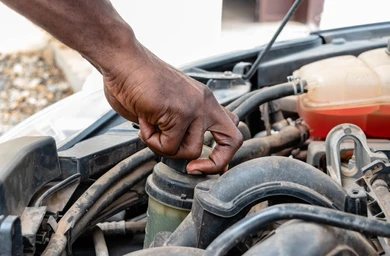
A vehicle’s fluids, including engine oil, coolant, brake fluid, and power steering fluid, are crucial for its proper operation. Low or contaminated fluids can lead to overheating, brake failure, and the loss of power steering. Regular fluid checks and timely changes prevent system failures that could cause a loss of vehicle control.
Steering and Suspension ⚙️
A vehicle’s steering and suspension systems work together to provide stability and control. Worn-out components like ball joints, tie rods, or shocks can lead to a loss of steering control and poor handling. This is particularly dangerous when navigating turns or uneven roads. A stable suspension and responsive steering are fundamental for safe driving.
Beyond Safety: Economic and Environmental Benefits
Beyond the clear safety benefits, regular vehicle maintenance also offers significant economic and environmental advantages. A well-maintained vehicle is more fuel-efficient, saving you money on fuel and reducing harmful emissions. Proactive maintenance can also prevent minor issues from escalating into major, expensive repairs. For instance, replacing an inexpensive winding belt on time is far cheaper than replacing an entire engine due to a snapped belt. Taking care of your vehicle is a smart investment that pays off in both safety and savings.
The Path Forward: Government and Public Responsibility
While government efforts like the mandatory vehicle inspection program are a step in the right direction, enforcement remains a significant challenge. It’s equally important to raise public awareness about the life-saving value of vehicle maintenance. A well-maintained vehicle is less likely to break down, easier to control in an emergency, and safer for everyone on the road.
In the end, road safety in Uganda is a two-part equation: it’s not just about driver behaviour, but also about the mechanical integrity of every vehicle on the road. Keeping vehicles in proper condition is a simple yet powerful way to reduce crashes and protect lives.